
Culture Shock
Most people experience some form of culture shock when going abroad and experiencing different food, customs, language and people. Culture shock is the physical, psychological, and behavioral reactions to living or studying in unfamiliar cultural contexts. While some people have no major issues while studying abroad, other people experience significant stress.
Culture shock is not a disease and you can minimize its negative effects by learning in advance what you are likely to experience after your arrival. In the next section, we describe four stages commonly used to understand the process of cultural adjustment.
Cultural Adjustment Process
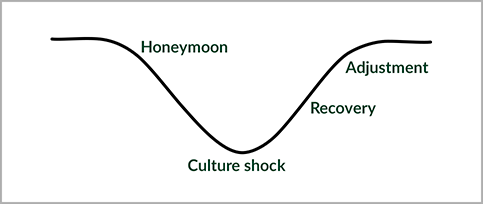
Stage 1: Honeymoon
At first you may be excited by the new environment and tend to focus on the positive aspects of your experience while downplaying some difficulties, occasional negative emotions and cultural differences that may exist.
Stage 2: Culture Shock
As cultural differences become more obvious, what previously seemed exciting may become frustrating. Mental fatigue may result from constantly trying to comprehend the new culture and language. Insignificant difficulties may get blown out of proportion and become major catastrophes. Frustration and sometimes a loss of self-confidence may result. You may feel isolated and become socially withdrawn. You may also seek security in the familiar people and food.
Stage 3: Recovery
Everyday activities such as housing and shopping are no longer major problems.
Stage 4: Adjustment
By this time, you may have experienced successes in negotiating a variety of social situations.
You may have increased language skills and can accept many Japanese customs as a different way of being. You feel comfortable with Japanese people and you may even feel a sense of belonging. You are now bicultural.
Note: Not everyone will go through the cultural adjustment stages in a static way.